…VC Adebowale: University Will Remain Locally Relevant, Globally Competitive
The University of Ibadan (UI) has reaffirmed its determination to remain locally relevant and globally competitive, while strengthening its position as a leading institution for higher education and sports development in Africa.
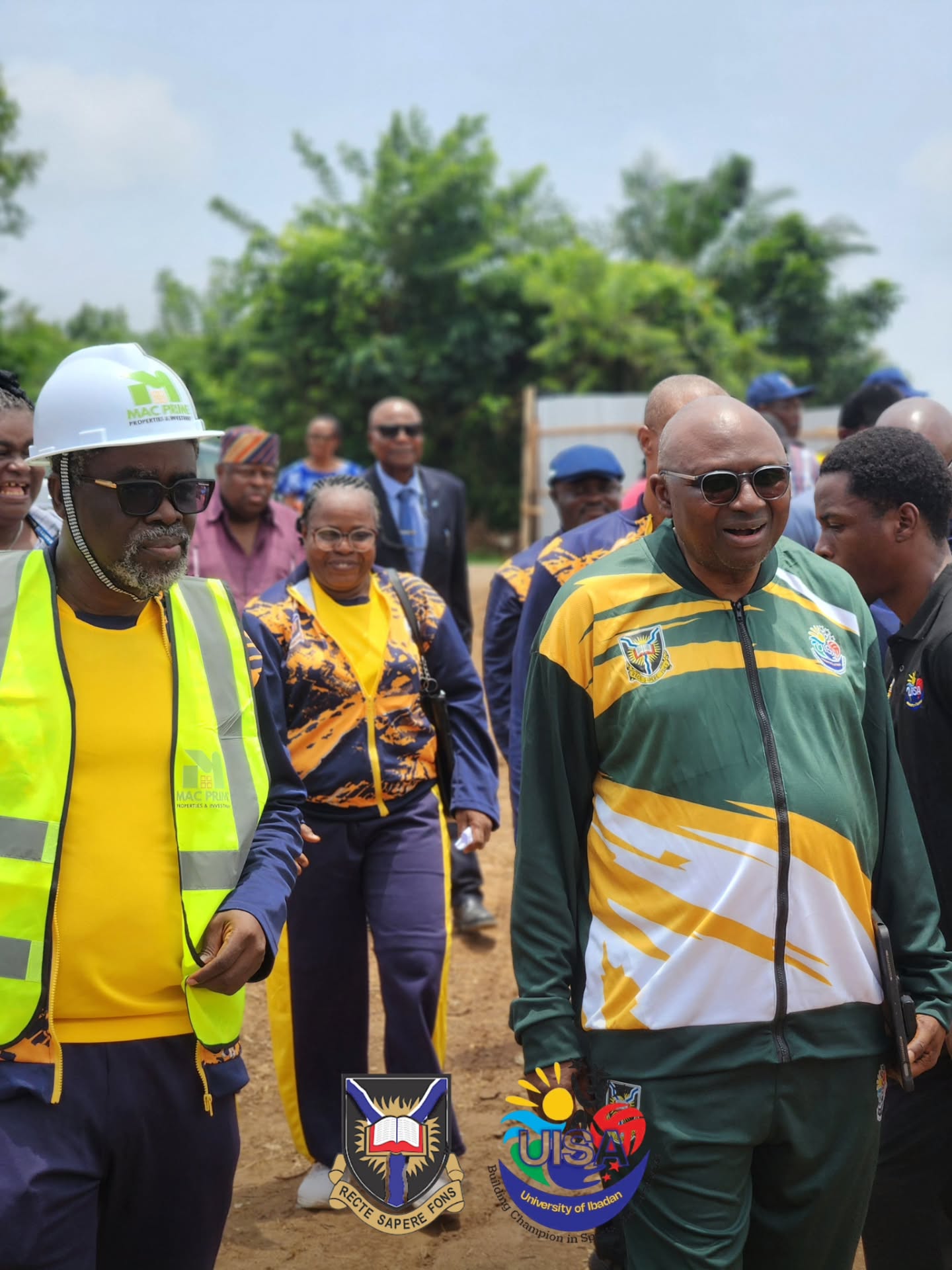
The Vice-Chancellor of the University, Professor Kayode O. Adebowale, mni, FAS, fspsp, stated this at the turning of the sod and groundbreaking ceremony for a 500-bed hostel and 34-room luxury apartment complex being developed for the University of Ibadan Sports Academy.
Professor Adebowale said the project represented more than the construction of accommodation facilities, describing it as an important component of the university’s broader vision of developing sustainable infrastructure, promoting sporting excellence and strengthening its financial base.
According to him, the groundbreaking marked the culmination of a vision initiated by the Convener of the University of Ibadan Sports Academy, Professor O. A. Adegbesan, whose dedication and foresight had driven the initiative from conception to implementation.
The Vice-Chancellor commended Adegbesan for his commitment to the project, saying the initiative had the potential to transform not only the Sports Academy but also the university’s contribution to the development of Nigerian sports.
> “Today, we are not just laying a foundation for a hostel and apartments. We are laying the foundation for a new model of sustainable development for the University of Ibadan,” Adebowale said.
The Vice-Chancellor described the development as a major pillar in the Sports Academy’s ambition to become a self-sustaining entity capable of contributing meaningfully to the financial independence of the university.
He said the project aligned with the institution’s determination to strengthen the relationship between the university and the wider society through innovative partnerships capable of delivering value to both the university community and the nation.
Adebowale identified two major dimensions to the project: infrastructure for sporting excellence and financial sustainability through a Sports-as-Business model.
On infrastructure, he said the 500-bed hostel would provide student-athletes and members of the wider university community with modern and comfortable accommodation.
He stressed that athletes seeking to compete successfully at national and international levels require not only quality training facilities but also conducive living and learning environments.
According to him, the new accommodation would enhance the welfare of student-athletes and enable them to pursue academic and sporting excellence simultaneously.
He added that the initiative was consistent with the Federal Government’s vision under the National Sports and Education Centres of Excellence programme, positioning the University of Ibadan to play a leading role in the development of the initiative.
Adebowale said the 34-room luxury apartment complex would serve an equally important purpose by generating additional Internally Generated Revenue (IGR) for the university and strengthening the financial sustainability of the Sports Academy.
He described the arrangement as a practical application of the “Sports-as-Business” philosophy, through which sporting infrastructure could become an economic asset while simultaneously supporting talent development.
According to him, creating a diversified and sustainable revenue base would enhance the long-term viability of the Sports Academy and reduce dependence on conventional funding sources.
The Vice-Chancellor therefore charged the developers to ensure that the project was completed on schedule and to the highest quality standards, stressing that the facilities must reflect the reputation and tradition of excellence associated with the University of Ibadan.
Earlier, the Chairman of the University of Ibadan Sports Academy, Professor Olufemi A. Adegbesan, said the vision behind the initiative was to establish a sports academy capable of competing favourably with leading institutions of its kind anywhere in the world.
Adegbesan explained that the development was designed to create an environment where talented young Nigerians could combine quality education with professional sports training, while developing the discipline, character and skills required for successful careers both within and beyond sports.
He expressed confidence that the infrastructure would contribute significantly to the emergence of a new generation of Nigerian athletes equipped to excel on the national and international stages.
The Managing Director and Chief Executive Officer of MacPrime Properties, Mr Ademola Adeniyi, said the company’s decision to partner with the University of Ibadan was driven by a desire to make an enduring contribution to sports and education.
Adeniyi said the partnership represented more than an investment in physical infrastructure, describing it as an investment in the future of sports, education and young Nigerians.
He expressed confidence that the project would provide a strong foundation for the Sports Academy’s growth and enable it to contribute more effectively to the development of sporting talent.
The groundbreaking ceremony attracted an array of university, sports and business personalities.
Among those present were principal officers of the University of Ibadan, members of the University Council, leaders of the university community, business leaders, sports administrators, past and present sports personalities and students of the Sports Academy.
Notable sports figures at the event included former Super Eagles international Mutiu Adepoju, popularly known as “The Headmaster,” and Dr Bolaji Ojo-Oba, a former Executive Secretary of the Nigerian Football Federation.
The gathering underscored the growing ambition of the University of Ibadan to integrate education, sports development, entrepreneurship and sustainable revenue generation into its institutional development strategy.
With the commencement of the project, the university is positioning its Sports Academy not merely as a centre for athletic training, but as a potentially significant platform for talent development, education, research, sports business and national development.
Professor Adebowale’s declaration that UI will remain “locally relevant and globally competitive” thus takes on added significance as the institution seeks to combine its historic academic reputation with modern infrastructure and innovative approaches to sports development.