Oyo State—fondly known as the “Pace Setter State”—occupies a distinctive place in Nigeria’s democratic evolution. Since the advent of the Fourth Republic in 1999, its politics has been shaped by a complex blend of intellectual activism, traditional authority, grassroots mobilization, and intense party rivalries. Unlike many states where political succession is largely dictated by incumbency power, Oyo’s electorate has cultivated a culture of independence. No sitting governor since 1999 has successfully installed a preferred successor—an enduring “succession jinx” that underscores the state’s unpredictable democratic temperament.
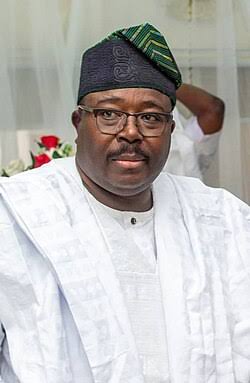
Within this dynamic political terrain stands Senator Sharafadeen Abiodun Alli, widely known as BSA. As the 2027 gubernatorial cycle gradually takes shape, his political trajectory—spanning over three decades—offers a compelling case study in continuity, resilience, and strategic positioning. The question dominating party circles is not merely whether Alli is ambitious, but whether his political architecture is strong enough to withstand Oyo’s historically volatile succession politics.
Oyo State’s Political Culture: Tradition Meets Republicanism
Oyo’s politics is rooted in two powerful traditions: reverence for indigenous institutions and a fiercely republican electorate. Ibadan, the state capital, remains the political nerve center, accounting for nearly half of the state’s voting strength. Yet political legitimacy in Oyo is rarely inherited; it is negotiated through alliances that connect the ancient palace system with modern party machinery.
The coronation of Oba Rashidi Ladoja as the 44th Olubadan of Ibadanland in 2025 symbolized this convergence of tradition and politics. For Senator Alli—who served closely under Ladoja as Secretary to the State Government (SSG) and later Chief of Staff—the moment reinforced a long-standing alliance that now carries both political and cultural implications.
Socio-Political Genesis: Identity and Intellectual Formation
Born on April 20, 1963, into the Olofiere family of Mapo in Ibadan, Alli’s roots are deeply embedded in the traditional heartland of the city. His upbringing in Oke Aremo and early exposure to community structures provided him with a grassroots sensibility that would later define his political style.
Educated at Progressive Day School and Anwaru-Islam Grammar School, he proceeded to the University of Ibadan where he earned his LL.B. in 1986. He was subsequently called to the Nigerian Bar and later obtained a Master’s degree in Law. In a strategic move to deepen his intellectual profile, he earned a Ph.D. in Legislative and Strategic Studies from the Federal University Lokoja—positioning himself not merely as a career politician, but as a governance theorist.
This academic layering is significant in Oyo State, where political actors are often scrutinized for intellectual depth. It strengthens Alli’s claim to being both a practitioner and a scholar of governance.
Early Executive Exposure: Building the Grassroots Base
At just 28 years old, Alli was elected Executive Chairman of Ibadan North Local Government (1991–1993), the most populous council in the state. This early executive exposure was pivotal. It provided him with:
– Administrative experience.
– Deep networks across ward structures.
– Institutional memory of grassroots governance.
Unlike rivals who rose through federal appointments or private-sector prominence, Alli’s political apprenticeship began at the local level—a factor that still resonates with community leaders across Oyo South.
The Administrative Engine Room Advantage
Alli’s tenure as SSG and later Chief of Staff under Governor Ladoja placed him at the center of executive governance. The SSG position, often described as the administrative “engine room” of a state government, bridges political leadership and the civil service bureaucracy.
His service during the intense political crisis involving the late Chief Lamidi Adedibu required strategic discretion and administrative resilience. Surviving and navigating that era enhanced his reputation as a loyalist and crisis manager.
Later, as Chairman of Oodu’a Investment Company, the economic conglomerate owned by the six South-West states, he extended his influence beyond Oyo. Under his leadership, projects such as Cocoa Mall and Heritage Mall were advanced—strengthening his image as an economic administrator capable of balancing politics with development.
Legislative Influence in the 10th Senate
In 2023, Alli was elected Senator representing Oyo South under the platform of the All Progressives Congress (APC). His victory over prominent opponents signaled not just personal popularity, but strategic coalition-building across Ibadan and Ibarapa.
As Chairman of the Senate Committee on Electoral Matters, he occupies a highly strategic national position. Electoral legislation directly shapes the rules of political competition; chairing such a committee enhances his relevance within the national party hierarchy.
Additionally, his membership in the ECOWAS Parliament broadens his diplomatic profile, reinforcing a statesman image ahead of 2027.
Constituency Strategy: Development as Political Capital
Alli’s first-year senatorial performance demonstrates a calculated focus on tangible, grassroots-impact projects:
– Installation and rehabilitation of boreholes across multiple wards.
– Educational support initiatives for senior secondary students.
– Economic empowerment for widows, traders, and youth.
– Legislative motions addressing local crises and national heritage recognition.
These interventions are politically strategic. In Oyo’s competitive landscape, visible constituency delivery translates into loyalty and delegate strength during primaries.
Comparative Analysis: APC Heavyweights
The APC’s 2027 ticket is expected to attract formidable contenders.
Senator Teslim Folarin retains structural influence within party machinery but faces the burden of the 2023 electoral defeat.
Chief Adebayo Adelabu commands federal visibility and financial resources, though his prior party defection raises loyalty concerns.
Chief Sunday Dare enjoys proximity to the Presidency and technocratic appeal, yet lacks deep grassroots electoral victories in Oyo.
Alli’s distinguishing strength lies in his hybrid profile—executive experience, legislative authority, and traditional legitimacy.
The Geopolitical Question: Zoning and Power Rotation
A central challenge is the zoning debate. Since 1999, Ibadan has dominated the governorship, with only a brief interruption from Ogbomoso. Agitations from Oke-Ogun, Oyo, Ogbomoso, and Ibarapa zones for power rotation could complicate any Ibadan candidacy.
However, Ibadan’s demographic strength remains decisive. Alli’s representation of Oyo South—bridging Ibadan and Ibarapa—may help him frame his candidacy as regionally inclusive rather than exclusively metropolitan.
The Ibadan State Proposition: A Structural Wildcard
A transformative variable is the agitation for the creation of “Ibadan State.” If realized before 2027, it would neutralize zoning arguments within the new state structure.
In such a scenario, Alli’s seniority as sitting senator and high-ranking Ibadan chief would position him as a frontrunner for the maiden governorship. The political equation would shift from inter-zonal competition to intra-metropolitan consensus.
Three Strategic Dimensions Toward 2027
Presidential Alignment:
APC primaries are heavily influenced by presidential preference. Alli’s electoral committee chairmanship places him in strategic proximity to national power calculations.
Party Reconciliation:
Oyo APC’s internal healing process will determine whether the ticket emerges from factional warfare or negotiated consensus. Alli’s relatively neutral posture could benefit him.
Countering the Incumbency Brand:
Governor Seyi Makinde maintains significant popularity. The APC must present a candidate capable of matching infrastructural focus with intellectual depth. Alli’s “Omoluabi” persona and scholarly credentials may appeal to civil servants and middle-class voters.
Conclusion: A Formidable but Conditional Path
Senator Sharafadeen Abiodun Alli represents a synthesis of Oyo State’s three power pillars:
- Administrative mastery.
- Legislative influence.
- Traditional legitimacy.
His profile as a procedural politician—comfortable within the civil service framework, legislative chamber, and traditional council—makes him a formidable 2027 contender.
Yet Oyo’s history warns against overconfidence. Zoning agitation, party rivalries, and evolving national dynamics remain significant variables.
Ultimately, the 2027 governorship contest will test whether experience and cultural legitimacy can prevail over financial muscle, structural dominance, or technocratic branding. At this moment in Oyo’s unfolding political narrative, Sharafadeen Alli stands not merely as an aspirant—but as a central architect in the recalibration of power within the Pace Setter State.