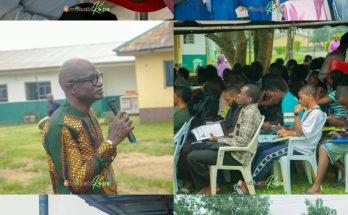
As Nigeria marked yet another Democracy Day, a political and public affairs analyst, Debo Adeoye, has raised fundamental questions about the country’s democratic credentials, asserting that what currently exists is far from government by the people and for the people.
In a strongly worded critique, Adeoye argued that the foundational essence of democracy—popular participation, accountability, freedom, and social justice—has been largely eroded in Nigeria’s political landscape, replaced instead by manipulation, elite impunity, and systemic neglect of the masses.
“What we have in Nigeria is not democracy, but a cleverly disguised system of elite domination. Can any serious scholar in political science, philosophy, sociology or even basic logic, confidently defend Nigeria as a democratic state before the global academic community?” Adeoye asked.
According to him, democracy—philosophically defined as the rule of the people—presupposes a system where the governed are active participants in shaping governance outcomes. However, in Nigeria, he observed, the will of the people is frequently subverted by violence, electoral malpractice, and state-sanctioned thuggery.
Citing the pervasive use of political thugs, hoodlums, and even terrorists to influence elections, Adeoye lamented that individuals with criminal records are often rewarded with government contracts and protection for their role in disrupting electoral processes and intimidating political opponents.
“We now live in a country where those who should be in prison are celebrated as kingmakers,” he said. “Honest and God-fearing candidates are often chased out of the system by political desperados.”
Adeoye emphasized that the voices of ordinary Nigerians are increasingly being drowned out by violence, suppression, and poverty, as policies rolled out by successive administrations have mostly been anti-people and pro-elite.
He expressed dismay at the seeming collusion between the three arms of government, accusing them of being united in self-interest rather than in defense of the common man.
“None of the arms of government is standing up for the people. They chorus anti-people policies and delight in seeing Nigerians suffer, while smiling to the bank,” he alleged.
Adeoye also criticized the concentration of power in the presidency and state governorships, noting that governance often grinds to a halt whenever the President or a state governor is unavailable.
“In our own type of democracy, once the president or governor goes on rest, governance is suspended,” he lamented. “They pretend to be working, but the people know better.”
Adeoye emphasized that true democracy must be felt in the everyday lives of citizens—through access to education, healthcare, food, housing, and justice.
“How many Nigerians can still afford to send their children to school? Education, which used to be accessible to all, has been priced out of reach. Even used textbooks are no longer shared among siblings because the system keeps changing them for profit,” he said.
He painted a grim picture of worsening poverty, high transportation costs, inaccessible healthcare, and food insecurity. According to him, people are dying of preventable illnesses due to the cost of hospital treatment.
Despite his criticism, Adeoye acknowledged President Bola Ahmed Tinubu’s efforts in debt repayment and some commendable infrastructural projects. However, he urged the president to do more in addressing food insecurity, insecurity in farmlands, and the unaffordable cost of education.
“Farmers are under siege by armed herdsmen and terrorists, making food production difficult. Real estate developers are also pushing farmers off lands near cities. Government must regulate these excesses if food security is to be achieved,” he warned.
Adeoye called for a task force or committee to review education funding and reduce the financial burden on parents.
“The little relief Nigerians feel today is often not from institutional policy but from the goodwill of the president or a few state governors. That is not sustainable democracy,” he added.
He singled out Governor Seyi Makinde of Oyo State for praise, describing him as a leader who has prioritized the welfare of the people.
“Governor Makinde is making Oyo proud. He’s a perfect example of what democratic leadership should look like,” he said, also commending a handful of lawmakers at the National Assembly for truly representing their constituents.
Drawing a comparison with the United States, Adeoye cited how, despite President Donald Trump’s populist agenda, America’s legislative and judicial arms continually hold him accountable—a hallmark of functioning democracy.
“That is the beauty of democracy. In the end, Americans benefit from the checks and balances. Here in Nigeria, nobody checks the president or governors. They are left alone to either shine or ruin everything,” he said.
In conclusion, Adeoye issued a heartfelt appeal to the President and political leaders at all levels to deepen democratic practices, uphold accountability, and genuinely serve the people.
“Every citizen in a democracy should benefit from it. That has not been the Nigerian story. I call on President Tinubu to intensify efforts to change that narrative. Let every appointee and elected leader be forced to work for the people. Only then will Nigeria begin to reap the fruits of democracy.”
He ended with prayers for national renewal, urging Nigerians not to lose hope, and calling on leaders to ensure that the promise of democracy is no longer a distant dream, but a lived reality.