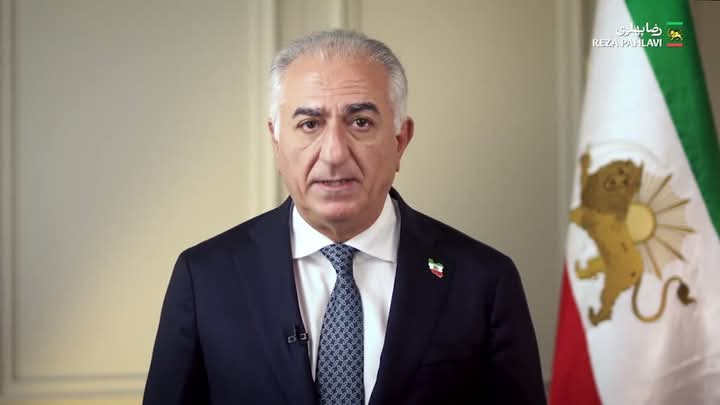
The escalating war in the Middle East has taken a dramatic political turn as exiled Iranian Crown Prince Reza Pahlavi announced that he has accepted a mandate to help lead a political transition in Iran if the current Islamic Republic collapses.
Pahlavi made the declaration in a public address to Iranians and regional leaders amid intensifying military exchanges between Iran and Israel, with the conflict spreading anxiety across the Middle East and raising fears of a wider regional war.
The exiled prince, son of the late monarch Mohammad Reza Pahlavi, accused the Islamic Republic of fueling decades of instability in the region through its support for armed groups and proxy conflicts.
He also condemned recent missile attacks attributed to Iran against several Gulf states, including Saudi Arabia, United Arab Emirates, Bahrain, Qatar, Kuwait, Oman, Jordan, and Iraq, describing them as violations of regional sovereignty.
According to Pahlavi, the Islamic Republic has spent nearly five decades supporting militant groups across the Middle East, including Hezbollah in Lebanon and the Houthi Movement in Yemen, actions he said have contributed to prolonged instability in the region.
“The Iranian people have called on me to lead the transition after the regime is gone, and I have accepted that responsibility,” Pahlavi said, promising that any transitional administration would stabilize the country and allow Iranians to determine their future through democratic elections.
He pledged that a future Iranian government would rebuild relations with its Arab neighbours and re-integrate the country into the global economy after years of sanctions and diplomatic isolation.
Pahlavi also assured that a transition would avoid the mistakes seen in other post-conflict states by maintaining much of Iran’s existing administrative structure to ensure stability.
Meanwhile, the ongoing war has continued to shake the region, with missile exchanges, airstrikes and drone attacks reported across several fronts. Military analysts warn that the conflict could escalate further if diplomatic efforts fail to contain the crisis.
Despite growing speculation about possible regime change in Iran, the future of the country remains uncertain as the powerful Islamic Revolutionary Guard Corps retains significant influence over the nation’s security and political system.
As the conflict unfolds, observers say the coming weeks could prove decisive not only for the future of Iran’s government but also for the stability of the entire Middle East.