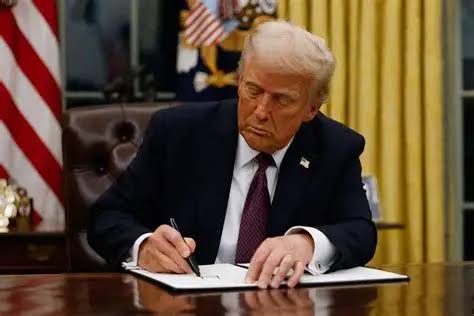
…Worldwide immigrant-visa appointments adjusted for enhanced screening as New York operation records 2,197 arrests and TPS protections end for Haiti, South Sudan
The United States has intensified its immigration enforcement campaign, unveiling a series of measures that could affect hundreds of thousands of foreign nationals, including visitors who later sought asylum, prospective immigrants awaiting consular interviews and migrants relying on Temporary Protected Status (TPS).
The latest developments point to a broader strategy by the administration of President Donald Trump to tighten both legal and unlawful immigration channels, combining visa revocations, enhanced consular screening, expanded Immigration and Customs Enforcement (ICE) operations and the termination of temporary protections for nationals of several countries.
Among the most significant measures is a plan to revoke the B-1 and B-2 business and tourist visas of up to 200,000 foreigners who entered the United States on visitor visas between 2016 and 2026 and subsequently applied for or are currently seeking asylum.
If implemented on the scale being reported, the action would represent the largest single mass visa revocation exercise in US history. The State Department has not, however, confirmed that all 200,000 visas will ultimately be revoked, and the final number could change as the review progresses.
Visitor visas under fresh scrutiny
The planned B-1/B-2 action targets people who were admitted to the United States as temporary visitors for business or tourism but later sought asylum.
The administration has argued that using a temporary visitor visa as the route into the country before filing an asylum claim undermines the purpose of the visa system and contributes to what it considers abuse of the asylum process.
According to reports based on State Department documents and US officials, the proposed review covers B-1 and B-2 visas issued during the 2016–2026 period. The State Department has indicated that the revocations would be carried out on a rolling basis.
Importantly, revocation of the visitor visa does not automatically mean immediate deportation. Individuals with pending asylum cases would still have those cases governed by the applicable asylum and immigration procedures, although losing the underlying visitor status could significantly alter their immigration circumstances.
The move nevertheless represents a major escalation in the government’s scrutiny of people who entered legally before seeking protection in the United States.
Immigrant visa processing also faces tougher scrutiny
The tightening is not limited to people already inside the United States.
The US State Department has temporarily adjusted immigrant-visa appointments worldwide as it rolls out a global training programme for consular officers.
The department said the training is designed to ensure officers can more consistently evaluate whether applicants are likely to become dependent on public benefits and whether they satisfy existing legal requirements relating to financial self-sufficiency. The department did not initially specify when the worldwide adjustment would end.
The development is particularly significant for families, workers and other prospective immigrants who may already have spent months or years navigating the US visa process.
Rather than simply increasing enforcement at the US border, the administration is increasingly applying scrutiny before applicants receive permission to immigrate.
The State Department has also introduced other changes affecting immigrant-visa processing, including a requirement that applicants generally interview in their country of residence or, where applicable, their country of nationality, subject to limited exceptions.
New York becomes major battleground
While the administration is tightening visa rules overseas, its domestic enforcement campaign has become particularly visible in New York, where federal authorities have intensified operations against people they say are unlawfully present in the country.
A month-long ICE operation dubbed “Operation Rotten Apple” resulted in 2,197 arrests across New York State between July 27 and August 29, according to Homeland Security Secretary Markwayne Mullin.
The operation covered New York City, Long Island, the Hudson Valley and parts of upstate New York.
Federal officials said those arrested included people with serious criminal records, including individuals accused or convicted of offences such as murder, rape, drug trafficking and other violent crimes.
DHS presented the operation as evidence that federal authorities can conduct aggressive immigration enforcement even where local governments limit their cooperation with ICE.
The federal government has been engaged in an increasingly bitter confrontation with New York political leaders over so-called sanctuary policies, which restrict the extent to which local authorities cooperate with federal immigration enforcement.
Mullin has warned that where state and local authorities decline to assist federal immigration officials, the federal government will deploy its own resources to carry out enforcement operations.
But New York Governor Kathy Hochul and New York City Mayor Zohran Mamdani have challenged aspects of the federal government’s characterisation of those arrested.
Hochul questioned the suggestion that everyone arrested during the operation should be considered a criminal in the conventional sense, arguing that federal immigration violations and criminal offences under New York law are not synonymous.
The disagreement illustrates the widening political and legal divide between the Trump administration and Democratic-led jurisdictions over how immigration enforcement should be conducted.
TPS beneficiaries face loss of work rights
Another major component of the administration’s strategy is the withdrawal of Temporary Protected Status (TPS) from nationals of countries whose designations have been terminated.
TPS is a federal immigration protection that allows eligible nationals of designated countries experiencing armed conflict, natural disaster or other extraordinary conditions to remain temporarily in the United States and obtain employment authorisation.
But the administration has moved to terminate TPS designations for several countries, including Haiti and South Sudan, following a major Supreme Court ruling.
In June 2026, the US Supreme Court ruled in Mullin v. Doe that federal courts could not review non-constitutional challenges to the Department of Homeland Security Secretary’s decision to terminate a country’s TPS designation. The decision removed a major judicial obstacle to the administration’s termination programme.
For Haiti, the federal government subsequently announced that TPS was terminated effective July 27, 2026. USCIS said employment authorisation documents issued to Haitian TPS beneficiaries under the relevant categories were no longer valid, requiring employers to reverify affected workers’ employment eligibility.
South Sudan followed.
The US government announced that South Sudan’s TPS designation was terminated effective August 7, 2026, with associated employment authorisation documents becoming invalid. Employers were instructed to reverify the employment eligibility of affected workers.
The consequences extend beyond employment.
For people whose only lawful basis for remaining in the United States was TPS, termination can eventually expose them to removal proceedings unless they qualify for another form of immigration relief or obtain a different lawful status.
A broader immigration enforcement architecture
Taken together, the measures demonstrate that the administration’s immigration policy is not focused solely on people crossing the US-Mexico border without authorisation.
The emerging strategy reaches across the entire immigration pipeline:
At the visa stage, applicants face more intensive financial, security and eligibility screening.
After entry, foreign nationals who entered on temporary visas but later sought asylum may face visa revocation.
Inside the country, ICE is conducting increasingly aggressive enforcement operations, particularly in jurisdictions that limit cooperation with federal immigration authorities.
For migrants already protected under temporary programmes, the government is terminating TPS designations and withdrawing associated work authorisations.
And for prospective immigrants overseas, consular operations are being adjusted as officers receive additional training and screening guidance.
The State Department has already separately imposed or maintained significant restrictions affecting nationals of numerous countries, including Nigeria, under broader visa-suspension policies.
Legal battles likely to continue
The scale and breadth of the immigration measures are expected to generate continued legal challenges.
Previous Trump administration immigration policies have repeatedly been challenged in federal courts, with judges blocking, modifying or questioning some measures while other policies have survived judicial scrutiny.
The proposed mass revocation of B-1/B-2 visas could become another major legal battleground, particularly if affected individuals argue that the government is improperly penalising people for exercising their right to seek asylum.
Similarly, TPS terminations have generated extensive litigation. The Supreme Court’s 2026 ruling, however, has substantially strengthened the administration’s ability to proceed with such terminations by limiting judicial review of the underlying decisions.
What the changes mean for immigrants and visa applicants
For foreign nationals dealing with the US immigration system, the developments create several practical consequences.
People holding B-1 or B-2 visas who have filed or are filing asylum claims could face revocation of their visitor visas.
People waiting for immigrant-visa interviews may experience delays or appointment adjustments as consular staff undergo additional training.
TPS beneficiaries from countries whose protections have been terminated may lose employment authorisation and their temporary protection from removal, unless another legal basis allows them to remain.
And people living in sanctuary jurisdictions can expect greater direct federal enforcement, particularly where local governments refuse to cooperate with ICE.
The administration, for its part, maintains that the measures are necessary to restore integrity to the immigration system, strengthen national security, reduce abuse of immigration programmes and ensure that immigrants are financially self-sufficient.
Critics argue that the policies go too far, potentially sweeping lawful immigrants, asylum seekers and long-term residents into an enforcement system designed primarily to address unlawful immigration.
A new phase in US immigration policy
The developments mark a significant shift in the character of US immigration enforcement.
Rather than concentrating exclusively on the southern border or recent unauthorised arrivals, the administration is applying pressure across the entire immigration system—from overseas visa applications and consular interviews to temporary protections and enforcement inside American cities.
With up to 200,000 B-1/B-2 visas potentially under review, more than 2,100 arrests already recorded in a single New York operation, worldwide adjustments to immigrant-visa processing and the termination of TPS for nationals of countries such as Haiti and South Sudan, the message from Washington is increasingly clear: immigration enforcement is being expanded well beyond the border.
For millions of current and prospective immigrants, the result is likely to be a US immigration system that is more heavily screened, more enforcement-driven and considerably less predictable than in previous years.
US Tightens Immigration Net as Trump Administration Targets 200,000 Visas, Expands ICE Sweeps