By Debo Adeoye – Ibadan
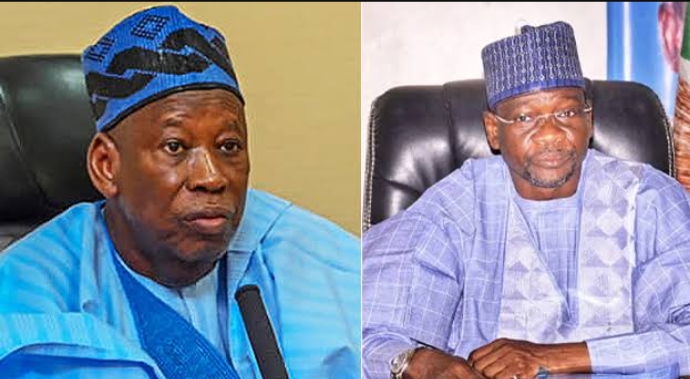
In a surprising turn of events that could reshape the internal dynamics of Nigeria’s ruling party, Alhaji Ali Bukar Dalori, Deputy National Chairman (North) of the All Progressives Congress (APC), has emerged as the Acting National Chairman following the sudden resignation of Dr. Abdullahi Umar Ganduje.
Ganduje, a former two-term governor of Kano State, tendered his resignation on Friday, June 27, 2025, at the party’s National Secretariat in Abuja. The official reason cited was “personal and health-related concerns,” but insiders suggest the move is connected to strategic zoning calculations ahead of the 2027 general elections.
Dalori’s elevation to acting chairmanship was in line with the party’s constitution. Section 14(2)(iii) of the APC Constitution provides that the Deputy National Chairman from the zone of the substantive chairman shall act in his absence or resignation.
With Ganduje’s exit, Dalori, who hails from Borno State and previously served as APC Chairman in the state, now assumes leadership of the party pending the formal election of a new National Chairman by the National Executive Committee (NEC).
While the party’s spokesperson, Felix Morka, confirmed Ganduje’s resignation was based on health grounds, several high-ranking APC insiders argue that political maneuvering ahead of 2027 played a critical role. According to sources, the issue of zoning the vice presidency has reopened conversations around balancing top positions in the party.
“There are strong indications that the vice presidential slot could be zoned to the North West in 2027,” a party insider told Vanguard. “If that happens, it would be politically difficult to retain the national chairmanship in the same zone. The chairmanship is officially zoned to the North Central, so this might be part of a broader strategic recalibration.”
Ganduje’s resignation also comes amid internal pressures and legal challenges to his leadership from party factions. His relationship with other northern political heavyweights, including reports of behind-the-scenes power tussles with former Governor Rabiu Kwankwaso—his political rival from Kano—may have further influenced the decision.
Alhaji Dalori is seen as a stabilizing figure within the APC. Having risen through the party ranks with a track record of grassroots mobilization and organizational discipline, his appointment is viewed as a stop-gap measure while preparations for a substantive national chairmanship election are underway.
Party sources say a special NEC meeting is being considered for later this year, likely in December, to formally decide on Ganduje’s replacement. Among the top contenders is Senator Umar Tanko Al-Makura, a former governor of Nasarawa State, who commands significant respect within the party’s North Central bloc.
The shake-up in APC leadership comes as political realignments quietly build momentum ahead of the 2027 elections. With President Bola Tinubu expected to seek a second term, regional interests within the party are already lobbying for inclusion in the power structure, including the vice presidency and other key national offices.
Observers believe the APC is repositioning itself early to avoid the kind of internal divisions that plagued the run-up to the 2023 elections.
Ganduje’s exit marks the end of a turbulent tenure characterized by legal battles, internal discord, and public criticism. Yet, he also played a central role in rallying support for President Tinubu’s 2023 presidential bid and was instrumental in consolidating party structures in several northern states.
His personal effects were reportedly removed from his office earlier on Friday, fueling speculation even before the official announcement was made. Staff and visitors at the APC secretariat reportedly received the news with shock.
As Dalori assumes leadership, political analysts say the APC must now tread carefully to avoid further factionalization and ensure the emergence of a broadly acceptable national chairman. The party’s NEC is expected to set a date for consultations and nominations in the coming weeks.
With the 2027 general elections already casting a long shadow over Nigeria’s political landscape, the ruling party appears to be resetting its leadership equation for both internal stability and electoral advantage.