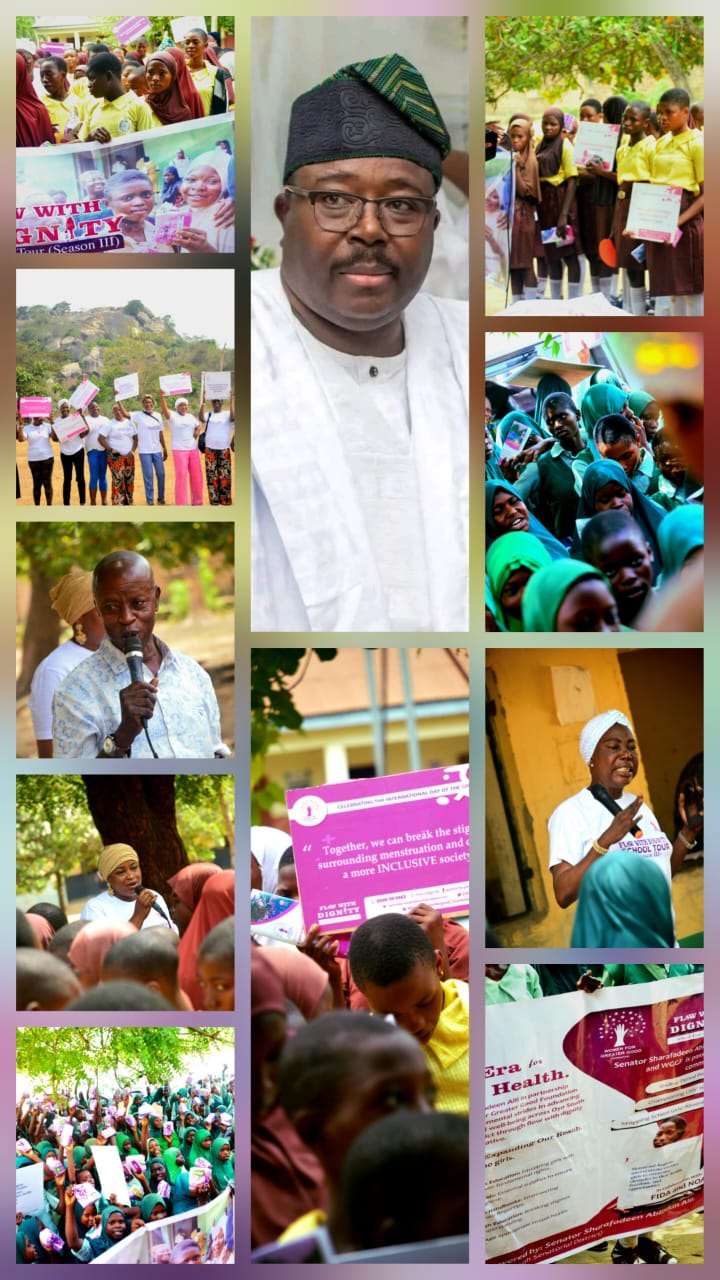
Senator (Dr.) Sharafadeen Alli (APC–Oyo South) has launched a large-scale girl-child empowerment initiative aimed at promoting safe sexual behaviour and hygienic menstrual management, reaching no fewer than 10,000 female students across communities in the Ibarapa zone of Oyo State.
The two-day sensitisation programme, held on February 2 and 3, covered seven secondary schools located in Tapa, Ayete, Igangan, Idere, Igboora, Eruwa and Lanlate, spanning Ibarapa North, Ibarapa Central and Ibarapa East Local Government Areas.
Tagged “Flow with Dignity School Tour – Season Three,” the initiative was organised by Senator Alli in partnership with the Women for Greater Good Foundation, the National Orientation Agency (NOA) and the International Federation of Women Lawyers (FIDA) as part of a nationwide awareness campaign on adolescent reproductive health.
The programme featured interactive sessions led by health professionals and APC women leaders, who offered counselling, shared real-life experiences and provided practical guidance on personal hygiene, menstrual health and responsible lifestyle choices.
Participants were cautioned against risky and immoral practices, encouraged to embrace self-worth and dignity, and educated on the health and social consequences of unsafe sexual behaviour. Facilitators adopted a motherly approach, fostering confidence and openness among the students.
As part of the intervention, Senator Alli distributed sanitary pads to the students, stressing that proper menstrual hygiene is essential to protecting girls’ health, improving school attendance and ensuring uninterrupted learning during monthly cycles.
Schools visited during the tour included Adegun Asake Grammar School, Igangan; Tapa Community High School; Ayete Grammar School; Oke-Idere High School; Lajorun High School, Igboora; Baptist School, Eruwa; and Onitabo High School, Lanlate.
The initiative was designed to equip adolescent girls with accurate information, practical skills and essential resources to manage menstruation with confidence and dignity, while promoting a supportive and health-conscious school environment across Ibarapa communities.
Community leaders and parents who witnessed the programme commended the intervention, describing it as timely and impactful. They expressed optimism that the initiative would significantly improve girl-child welfare, educational retention and overall health outcomes in Ibarapa land.