By Zachaeus Olatunde
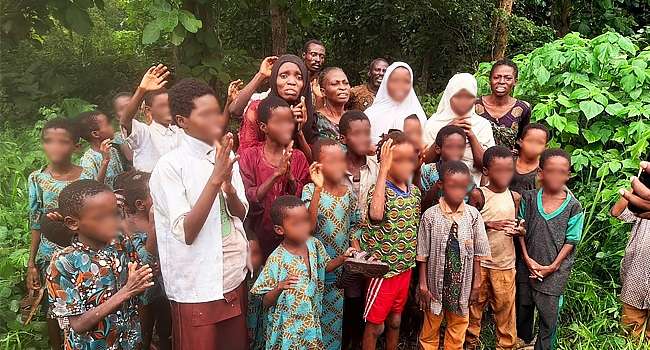
Fresh details have emerged on the harrowing 56-day ordeal endured by victims of the May 15, 2026 kidnapping, as one of the survivors, Mr. Zachaeus Olatunde, gave a chilling first-hand account of life in the terrorists’ camp and the circumstances surrounding the deaths of Mr. Michael Oyedokun and Deacon John Olaleye.
Speaking after regaining his freedom, Olatunde described the experience as one of unimaginable suffering, saying the victims lived in chains, were repeatedly beaten, denied the freedom to pray, and witnessed acts of brutality that left lasting emotional scars.
According to him, the terrorists accused Mr. Michael Oyedokun of disobeying their instructions on the day the victims were abducted.
He explained that immediately after they were taken into the forest, the kidnappers ordered everyone to surrender their mobile phones. While the other captives complied, the terrorists later discovered a phone in Mr. Oyedokun’s pocket.
“They said he disobeyed their order,” Olatunde recalled. “The terrorist riding with him discovered the phone and questioned him. Mr. Oyedokun explained that he did not hear the instruction, but one of the terrorists slapped him before reporting the matter to their commander.”
According to the survivor, the camp had two leaders—a General Commander and a Camp Commander. The General Commander reportedly became enraged after learning of the incident.
“He declared that if he was not going to kill anyone else, he would kill Mr. Michael Oyedokun for disobeying his order,” Olatunde said.
The following day, the terrorists reportedly took Mr. Oyedokun away from the camp.
“He cried loudly as they dragged him away. He pleaded for his life. We kept hearing his voice until it suddenly went silent,” he narrated.
Olatunde added that shortly afterwards, a teenage terrorist, believed to be between 17 and 18 years old, returned to the camp dancing and singing in celebration of the teacher’s death.
The second victim, Deacon John Olaleye, was reportedly killed on June 7, 2026.
According to Olatunde, the terrorists accused him of violating their warning that security forces should not approach their hideout.
“They did not kill either of them in our presence,” he said. “They took them away to another location. All we heard were their cries before everything became quiet.”
Describing conditions in captivity, Olatunde said the victims were confined inside a tent throughout the ordeal.
“We were chained for the entire 56 days. Our hands were handcuffed and our eyes blindfolded. Whenever anyone wanted to urinate or defecate, we had to beg for permission,” he said.
He disclosed that the kidnappers constantly moved the captives from one hideout to another to evade security forces.
“We never stayed in one place. Sometimes they struck us with the butts of their guns. Even when the younger children made mistakes, all of us were punished.”
Despite their violent disposition, Olatunde observed that the terrorists maintained strict religious routines.
“They never joked with their prayers. They prayed regularly and recited the Quran faithfully. They never missed their prayer times.”
He, however, alleged that the kidnappers prohibited the Christian captives from praying.
“They warned us never to pray or call the name of Jesus. Whenever they noticed us praying, they beat us mercilessly,” he said.
Olatunde also revealed that contrary to public assumptions, the kidnappers repeatedly claimed that ransom was not their primary objective.
“They kept telling us they did not want money. They said what they wanted was for their members who had been arrested by security agencies to be released.”
According to him, the kidnappers’ attitude changed significantly after learning that some of their own family members had been arrested by security operatives.
“After Deacon John Olaleye was killed and they heard that their families had been taken by the soldiers, they became less brutal. They started treating us better.”
The food provided in captivity, he said, was barely enough to sustain life.
“Most of the time they gave us plain rice with red oil and no pepper. Sometimes it was just rice without salt or oil. On one occasion they killed a deer and a grasscutter for us.”
Olatunde said the captives were eventually released after the terrorists informed them they no longer wished to keep them.
“They told us to go home because the military had arrested members of their families. They said if they released us, perhaps their own families would also be released.”
Before setting them free, the kidnappers reportedly gave detailed directions on how to reach safety.
“They told us we would cross two streams before meeting soldiers waiting for us.”
Many of the children were too weak to walk after nearly two months in captivity.
“I carried almost all the little children across the streams because they were exhausted. After trekking for some time, we finally met security personnel waiting to receive us.”
He disclosed that on arriving in Ibadan, military authorities showed him photographs of suspected kidnappers.
“I was able to identify one of them. The military later informed us that eight of the terrorists had been arrested, while others had been neutralised.”
While expressing gratitude to God for sparing the lives of the survivors, Olatunde said the joy of freedom remained incomplete because two members of the group never returned.
“We thank God that we survived,” he said. “But our hearts remain heavy because Mr. Michael Oyedokun and Deacon John Olaleye did not come back with us.”
Olatunde’s emotional testimony has provided one of the clearest accounts yet of the brutality experienced by victims of terrorist abductions in Nigeria, underscoring the devastating human cost of the country’s persistent insecurity.